Inspired with Alexa von Tobel
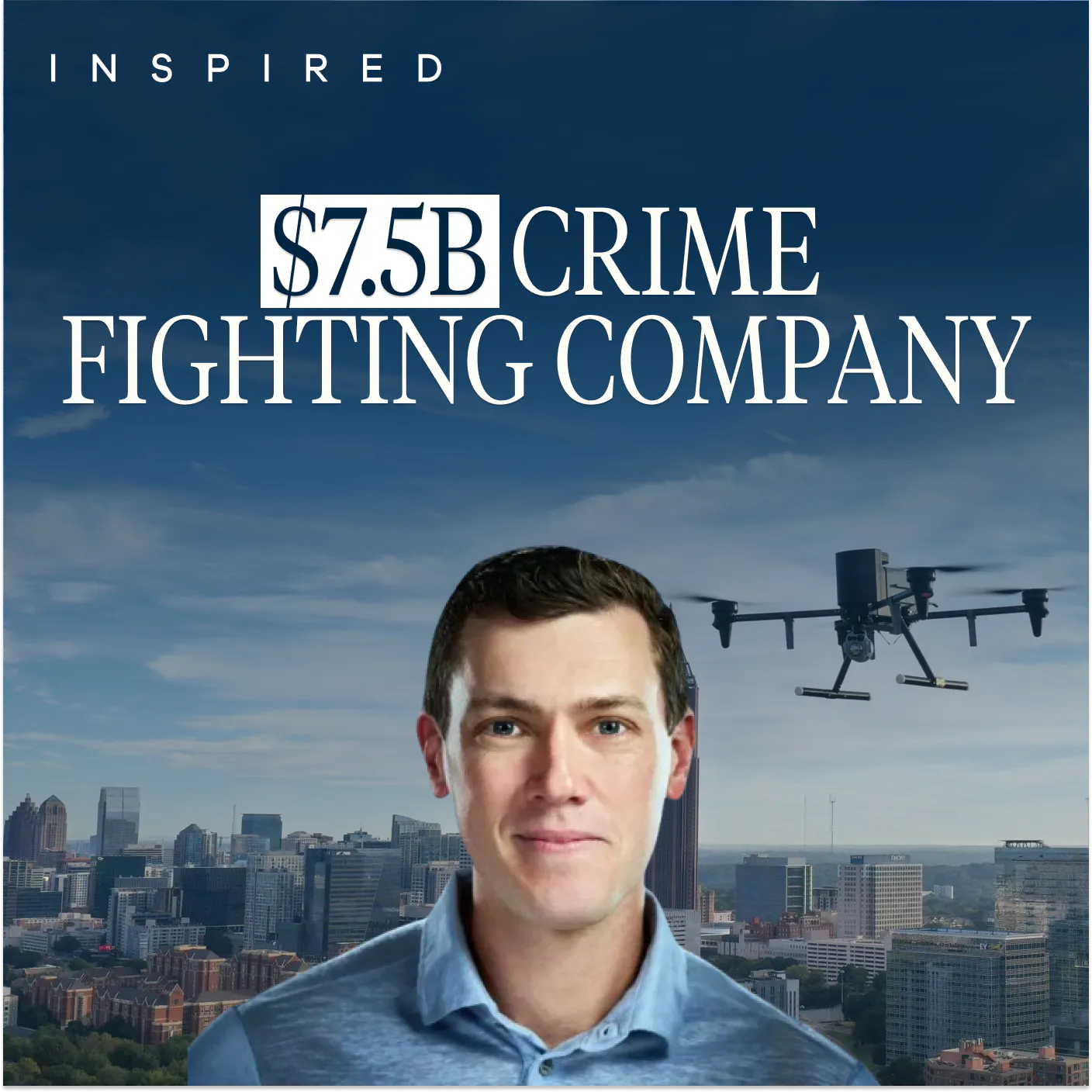
How Flock Safety Became a $7.5B Crime-Fighting Company with Founder Garrett Langley
14 Jan · 38 min
Key points
- Flock Safety has surpassed $300m in ARR and is growing nearly 70% year over year.
- The company raised $275m in March 2025 at a $7.5bn valuation and expects close to one million arrests this year.
- Founder Garrett Langley predicts AI will replace back-of-house police work, letting patrol double and build community relationships.
Flock Safety bets cameras and AI can restore homicide clearance
Flock Safety is building the sensing and software layer for American crime-fighting, selling cameras, drones and alerts to neighborhoods, businesses and the local police agencies that cover most of the country. The company reached a $7.5bn valuation because it addresses a failure that is easy to measure. Clearance rates for homicide have slid toward fifty-fifty, and departments lack the people and the evidence to close cases. Langley's answer is to automate the paperwork third of a police department so patrol can double, and to treat safety as the precondition for everything else, including the local investment his new fund makes.
Takeaways
- Flock Safety sells crime-fighting technology to police. Flock raised $275m in March 2025 at a $7.5bn valuation and has passed $300m in ARR, growing nearly 70% year over year. It works with 4,800 law enforcement agencies across more than 5,000 communities and expects to contribute to about a million arrests this year.
- Homicide clearance rates have fallen toward fifty-fifty. Langley says witnesses no longer cooperate the way society once expected, and prosecutors and juries demand far more proof. A shortage of experienced detectives compounds both, leaving roughly half of American homicides unsolved.
- Customers program the cameras to flag specific vehicles. A small Illinois town flagged a black SUV with tinted windows and no plate arriving during school pickup. Twenty cars gathering at an intersection signals a street takeover, and a U-Haul on a home improvement store lot is suspicious because contractors drive their own trucks.
- Software and AI will replace police back-office work. Langley predicts report and policy writing move to software, shrinking back-of-house units dramatically within a decade and pushing resources into patrol. He wants a Teach For America-style program for police, so officers double their presence and build community relationships.
- More camera evidence can mean fewer wrongful arrests. Von Tobel asks whether policing becomes Minority Report, with technology predicting crime and a robot making the arrest. Langley argues more available evidence can raise the bar for an arrest, which reduces the chance of taking the wrong person in.
- Team matters more than product or market. Langley was an early employee at Firethorn, which sold to Qualcomm for over $200m, and co-founded Experience, acquired by Cox for over $200m. He says team is the only thing that matters, and Flock now has close to 2,000 people.
- Safety underpins prosperity, so he funds local entrepreneurs. Langley argues capitalism solves most problems and that the answer to crime is jobs and economic mobility. His new Thriving Cities Fund invests in local entrepreneurs and is deliberately not a nonprofit.